
Recovery culture is quietly changing. The message used to be "colder, longer, harder." In 2026, the smarter framing is different: use the water temperature that fits the day.
Cold plunges still matter. But warm water immersion — the kind of soak you might take on a cool Nairobi evening — is finally getting the credit it deserves. And for many people, especially at home in Kenya, the most useful setup is not a single-purpose ice bath. It is a tub that can do both.
The best recovery setup is not always the coldest one. It is the one you can use consistently, safely, and intentionally.
Why "just ice" is too simplistic
Cold water immersion has genuine uses. It can reduce perceived muscle soreness after hard endurance sessions, sharpen alertness in the morning, provide a controlled stress that many people find mentally useful, and mark a clean end to a training block or workday.
But context matters. A growing body of research suggests that very cold immersion applied immediately after every strength session may blunt some of the muscle-building signal you are training for. That does not mean cold is bad. It means timing and goal matter.
Ice is a tool, not an identity.
What warm water does differently
Warm water immersion works on the opposite side of the nervous system. Instead of a sharp sympathetic spike, warm soaking tends to encourage a parasympathetic, wind-down response — slower breathing, softer shoulders, easier sleep onset for many people. Perceived muscle relaxation is often more pronounced in warm water than in cold.
For beginners, or for people who simply do not want to fight the cold every day, a warm soak is easier to repeat. And a recovery habit you actually keep beats an extreme habit you quit after two weeks.
When to choose cold vs warm
A simple decision framework:
| Choose cold when… | Choose warm when… |
|---|---|
| You want a brisk mental reset | You want to wind down before sleep |
| You need a post-endurance soreness rinse | You are stiff, cold, or generally depleted |
| You want a controlled stress challenge | You want comfort and repeatability |
| You are marking the end of a hard session | You are recovering from travel or a long day |
Combining the two into a hot-cold routine is possible too. For rounds, timing and rest, see our contrast therapy protocols guide.
Why one system that does both matters
Historically, cold plunge and warm soak lived in different products — an ice barrel in one corner of the gym, a hot tub in another. That is expensive, space-hungry and rarely used.
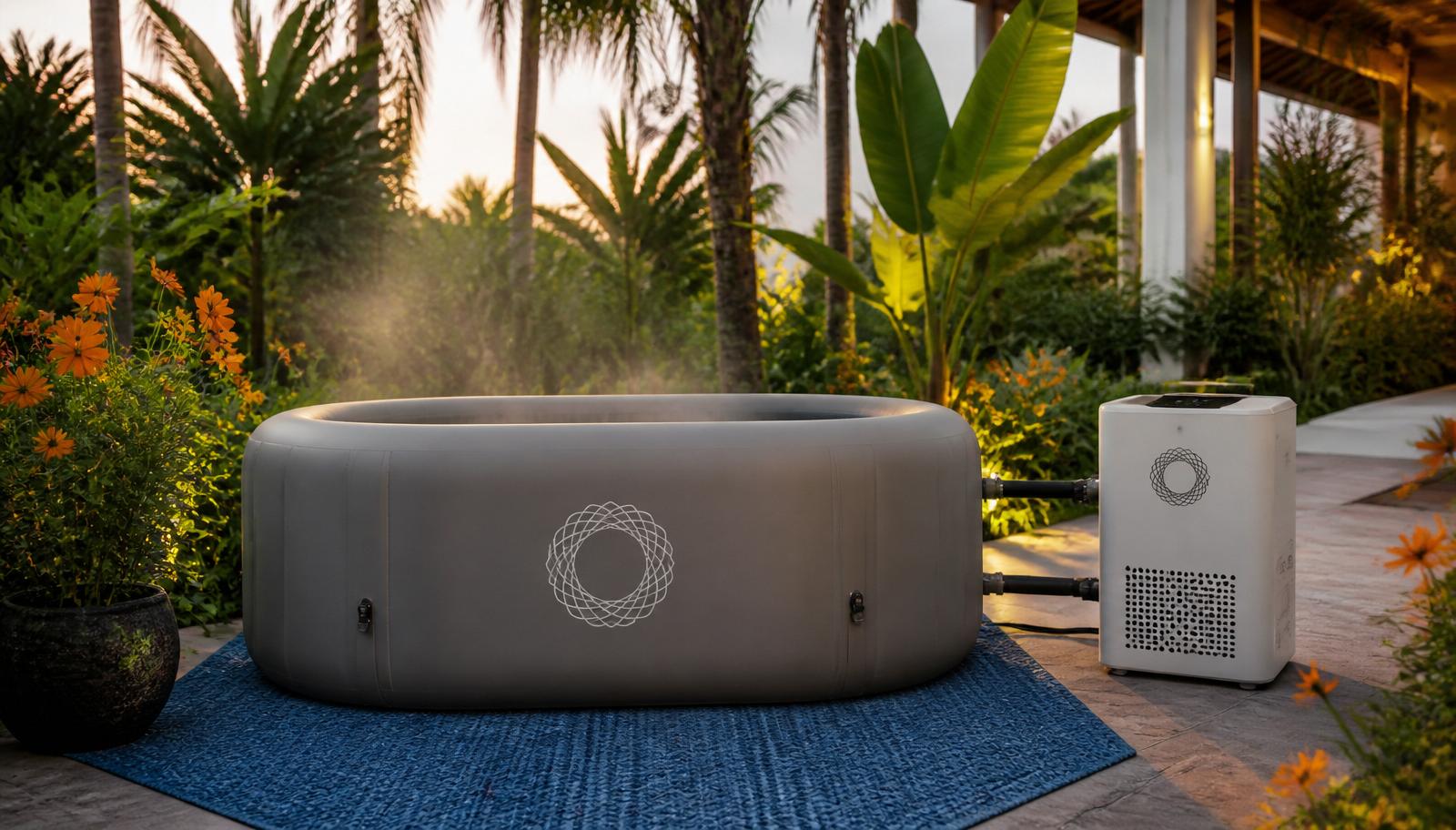
A NiceBaths inflatable tub paired with the 2HP chiller-heater-filter unit collapses that setup into one:
- Cool down to around 3°C for a proper cold plunge
- Heat up to around 40°C for a warm jacuzzi-style soak
- Built-in filtration so the water stays usable across multiple sessions
- No construction, no plumbing, no permanent build
For homes, villas, boutique wellness rooms and hospitality operators, the flexibility is the whole point.
Four practical routines
Beginner cold day
Water at 12–15°C. Two minutes. Focus on slow nasal breathing. Warm shower after. Done.
Warm recovery evening
Water at 38–40°C. Ten to fifteen minutes. Phone away. Dim light. Use it to close the day, not open one.
Athlete reset day
After a hard endurance session: 3–5 minutes at 8–12°C. On strength days, delay cold by several hours or skip it if hypertrophy is the goal.
Home wellness Sunday
Warm soak in the morning. Short cold plunge in the afternoon. Two different rituals from the same tub, no rebuild in between.
Want one system that can do both?
NiceBaths Kenya offers inflatable tubs and 2HP chiller-heater-filter units that can run as an ice bath or a warm jacuzzi-style recovery soak.
Explore recovery systems →Where NiceBaths fits
We deliver across Nairobi and countrywide. The NiceBaths ice bath + jacuzzi systems are designed for exactly this flexible pattern: same tub, same chiller-heater-filter unit, two very different experiences depending on the day. For businesses, see wellness setups for spas and hotels. For deeper primers, our ice bath vs jacuzzi comparison is a good next read.
Safety note
Cold and warm immersion both put load on the cardiovascular system. Do not use if pregnant, if you have heart disease or uncontrolled blood pressure, a fainting history, or serious medical conditions without first speaking to a qualified professional. Never immerse alone during early sessions. Exit at the first sign of dizziness, numbness, panic or confusion. See our Health & Safety page.
Frequently asked questions
Is cold plunge always better than a warm soak?+
No. Cold immersion has real uses, but warm water immersion supports relaxation, wind-down and perceived recovery. The best routine is one you can repeat safely.
Can the NiceBaths tub be used as both an ice bath and a warm soak?+
Yes. The same inflatable tub paired with the 2HP chiller-heater-filter unit can cool to around 3°C for cold plunge or heat to around 40°C for a warm jacuzzi-style soak.
Should I ice bath after every strength workout?+
Not necessarily. Some research suggests that very cold immersion immediately after resistance training may blunt muscle-building adaptations. Many people use cold on lighter days or later in the day.
Is a warm soak useful for sleep?+
Many people find a warm evening soak helps them wind down. It is not a medical treatment, but it can be a calm part of an evening routine.
Can I switch between cold and warm on the same day?+
Yes. Brief hot-cold contrast routines are popular. Start conservatively — see our contrast therapy protocols guide for details.
References
- Bleakley CM, Davison GW. "What is the biochemical and physiological rationale for using cold-water immersion in sports recovery?" British Journal of Sports Medicine, 2010. DOI: 10.1136/bjsm.2009.065565
- Roberts LA et al. "Post-exercise cold water immersion attenuates acute anabolic signalling and long-term adaptations in muscle to strength training." Journal of Physiology, 2015. DOI: 10.1113/JP270570
- Versey NG, Halson SL, Dawson BT. "Water immersion recovery for athletes: effect on exercise performance and practical recommendations." Sports Medicine, 2013. DOI: 10.1007/s40279-013-0063-8
- Hussain JN, Cohen MM. "Clinical Effects of Regular Dry Sauna Bathing: A Systematic Review." Evidence-Based Complementary and Alternative Medicine, 2018. DOI: 10.1155/2018/1857413
Not sure where to start?
Unsure which setup is right for you?
Take the 60-second recovery quiz for a personalized plan.
Take the 60-second recovery quiz →Talk to NiceBaths
Questions about “Cold plunge + warm soak: why recovery is moving beyond "just ice"”?
Message us on WhatsApp — your note is pre-filled with a reference to this article so we can help you faster.
WhatsApp NiceBaths about this article