
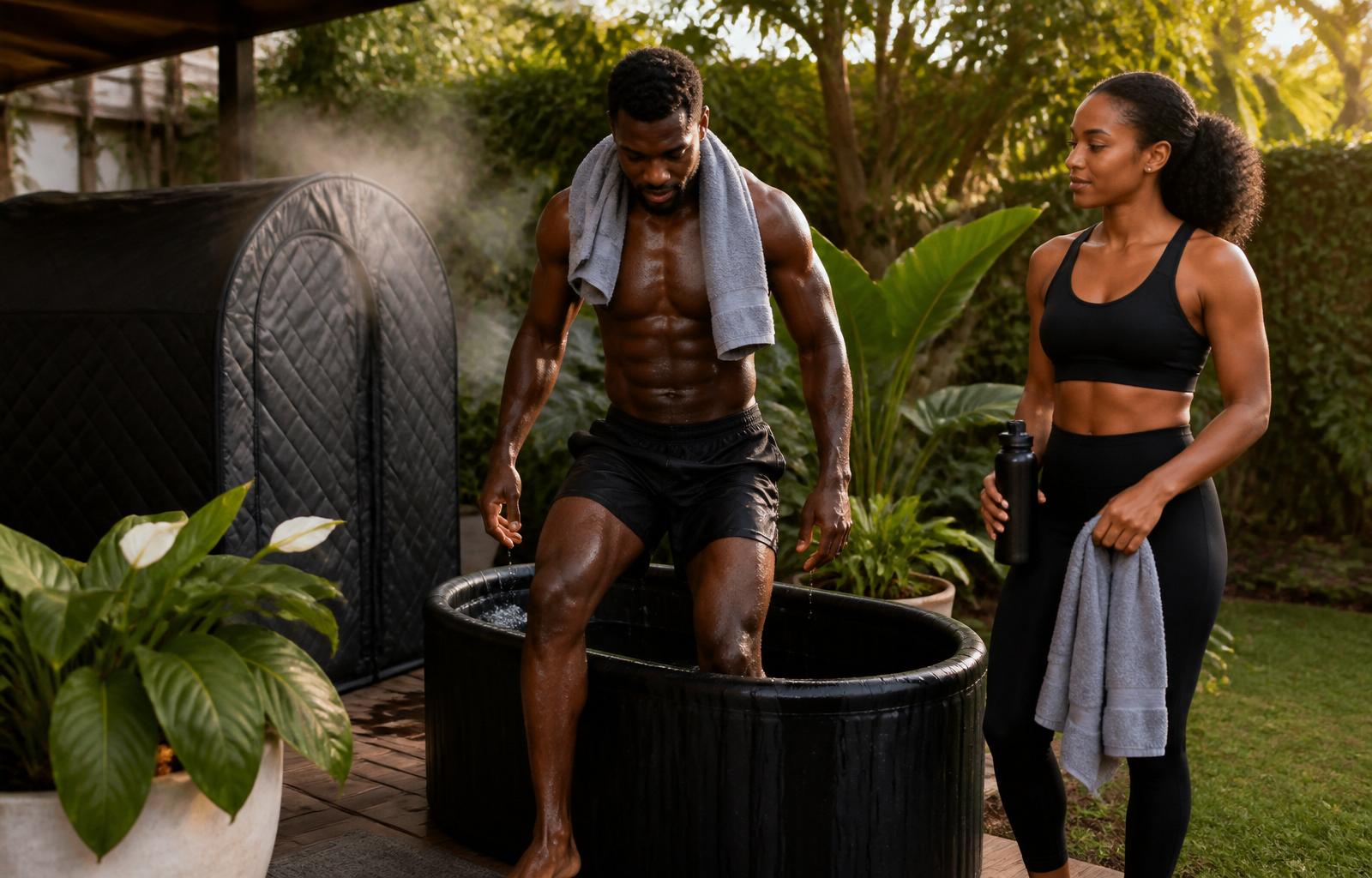
Contrast therapy means alternating heat and cold. In a NiceBaths setup, that could mean steam sauna, cold plunge, a warm jacuzzi-style soak, repeat rounds, rest and hydrate.
It sounds intense, but it does not need to be extreme. The best hot-cold routine is controlled, repeatable and matched to the person using it. For a full primer, see what is contrast therapy?
What does the research say?
Contrast water therapy has been studied mostly in sports recovery. A systematic review found that contrast water therapy improved muscle soreness compared with passive recovery after exercise-induced muscle damage. But the same review also found little evidence that it was clearly superior to all other popular recovery methods.
Contrast therapy can be useful, especially for perceived recovery and soreness, but it is not magic. It works best as part of a full recovery routine that includes sleep, hydration, nutrition and smart training.
What temperatures are used in studies?
Many contrast therapy studies use cold water around 8–15°C, hot water around 35.5–45°C, alternating cold and warm intervals, and total sessions from around 6–24 minutes. A practical home or spa protocol should be easier and safer than elite sports protocols.
Beginner protocol
Use this for first-time users, spa clients and general wellness. New to cold? Read cold plunge safety for beginners first.
| Step | Duration |
|---|---|
| Steam sauna | 5–8 minutes |
| Cold plunge | 30–60 seconds |
| Rest | 2 minutes |
| Rounds | 2 total |
Goal: calm breathing, gentle circulation response, confidence. Do not chase maximum cold.
Regular wellness protocol
| Step | Duration |
|---|---|
| Steam sauna | 8–12 minutes |
| Cold plunge | 1–2 minutes |
| Rest | 2–3 minutes |
| Rounds | 2–3 |
Goal: recovery ritual, alertness, relaxation, perceived soreness relief.
Athlete recovery protocol
Use this after hard training, football, running, gym sessions or Hyrox-style workouts.
| Step | Duration |
|---|---|
| Steam sauna or warm soak | 8–15 minutes |
| Cold plunge | 1–3 minutes |
| Rest | 2–3 minutes |
| Rounds | 2–3 |
Important: If strength or muscle-building is the main goal, avoid very cold immersion immediately after every heavy lifting session. Some research suggests frequent immediate cold immersion after resistance training may reduce some muscle-building adaptations. Use cold strategically, especially after conditioning, matches, endurance work or high-soreness sessions.
Business protocol for spas
Spas can offer contrast therapy as a premium package:
- Steam reset: 10–15 minutes steam sauna + shower + tea.
- Hot-cold mini reset: 8 minutes steam + 1 minute cold + rest.
- Full recovery session: 2–3 rounds of heat/cold/rest.
- Premium massage add-on: steam before massage, cold plunge after or on a separate recovery day.
This creates an additional paid experience without permanent construction.
How often should people do contrast therapy?
- Beginner: 1–2 times per week
- Regular wellness: 2–3 times per week
- Athlete recovery: 1–4 times per week depending on training load
- Business clients: offer it as a bookable session, not a forced extreme challenge
When should someone stop?
Exit immediately if you feel dizzy, faint, chest pain, shortness of breath, numbness that feels unsafe, confusion, panic, uncontrolled shaking, nausea, or feeling overheated or too cold.
NiceBaths takeaway
Contrast therapy should feel powerful, but controlled. For Kenya, the opportunity is clear: homes can build a private recovery routine, gyms can offer athlete recovery, spas can add a paid service, lodges can create a premium wellness experience and retreats can run guided hot-cold sessions. The infrastructure does not need to be permanent — a portable steam sauna plus chiller-heater cold plunge system can create a full recovery experience. See products, business setups and workshops.
Safety note
Speak with a medical professional first if you have heart disease, uncontrolled blood pressure, fainting history, pregnancy, respiratory conditions, cold sensitivity or serious medical conditions. Never do contrast therapy alone if you are new to it.
Offer hot-cold recovery at home, in your gym, spa, lodge or retreat.
Explore NiceBaths contrast therapy systems and steam sauna tents in Kenya.
See recovery systems →Frequently asked questions
Is contrast therapy better than just cold plunge?+
Not always. Contrast therapy may feel better for some people and can reduce perceived soreness versus passive recovery, but it is not always superior to every recovery method.
How cold should the cold plunge be?+
Beginners should start around 10–15°C. Advanced users may use 3–6°C for shorter sessions, but colder is not automatically better.
How hot should the heat be?+
Steam sauna around 40–60°C or warm water around 35–42°C can work well. The session should feel strong but safe.
How many rounds should I do?+
Start with 1–2 rounds. Most people do not need more than 2–3 rounds.
Can spas charge for contrast therapy?+
Yes. It can be sold as a guided recovery session, premium wellness package or add-on to massage.
Sources
- Bieuzen F, Bleakley CM, Costello JT. "Contrast Water Therapy and Exercise Induced Muscle Damage: A Systematic Review and Meta-Analysis." PLOS ONE, 2013. DOI: 10.1371/journal.pone.0062356
- Roberts LA et al. "Post-exercise cold water immersion attenuates acute anabolic signalling and long-term adaptations in muscle to strength training." Journal of Physiology, 2015. DOI: 10.1113/JP270570
- Machado AF et al. "Can Water Temperature and Immersion Time Influence the Effect of Cold Water Immersion on Muscle Soreness? A Systematic Review and Meta-Analysis." Sports Medicine, 2016. DOI: 10.1007/s40279-015-0431-7
Not sure where to start?
Unsure which setup is right for you?
Take the 60-second recovery quiz for a personalized plan.
Take the 60-second recovery quiz →Talk to NiceBaths
Questions about “Contrast Therapy Protocols: How to Combine Sauna and Cold Plunge Safely”?
Message us on WhatsApp — your note is pre-filled with a reference to this article so we can help you faster.
WhatsApp NiceBaths about this article