
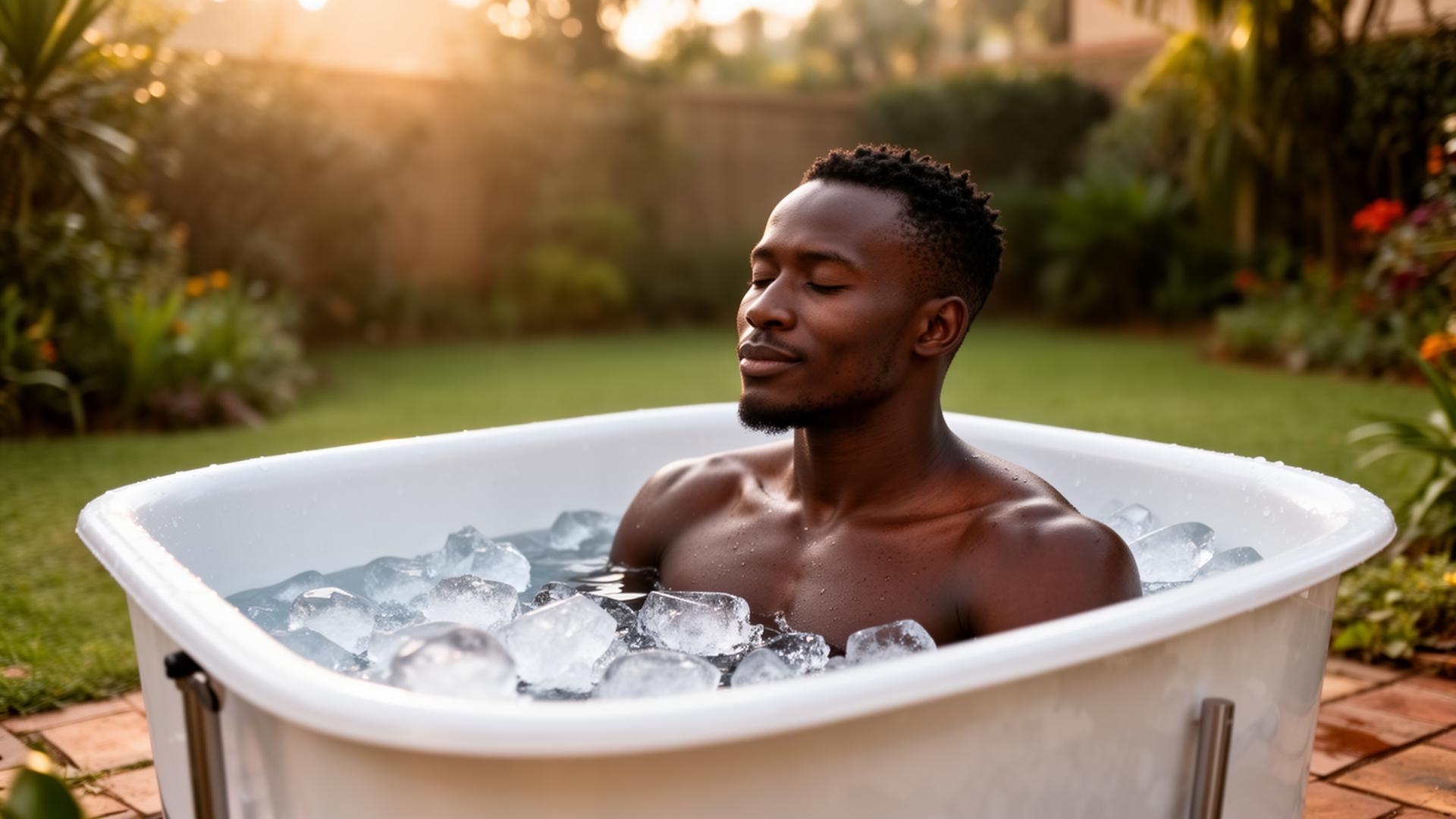
Cold plunges do not need to be extreme to be effective. The best ice bath is usually the one you can use consistently, safely and calmly.
Social media often makes cold plunging look like a contest. Real recovery practice is different. For most people, the goal is controlled cold exposure that supports recovery, mental resilience, circulation and nervous system regulation.
Why temperature matters
Cold water affects the body quickly. As the water gets colder, the stress response becomes stronger. Breathing changes, heart rate rises, blood vessels constrict, and the body works harder to protect core temperature. That is why a beginner should not start at near-freezing temperatures.
Recommended temperature ranges
Beginner: 10–15°C
A strong but manageable starting range for first-time users, nervous system training and gentle recovery. Duration: 1–3 minutes. The body still receives a clear cold stimulus without overwhelming most beginners.
Intermediate: 6–10°C
A more serious cold plunge range for regular users, athletes, post-training recovery and mental resilience practice. Duration: 2–5 minutes. The cold stimulus is stronger and many users feel a deeper reset.
Advanced: 3–6°C
Very cold — approach carefully. For experienced users, supervised athletes and short focused sessions. Duration: 1–3 minutes. Shorter is often smarter.
The best temperature is cold enough to challenge you, but not so cold that you lose control of your breathing.
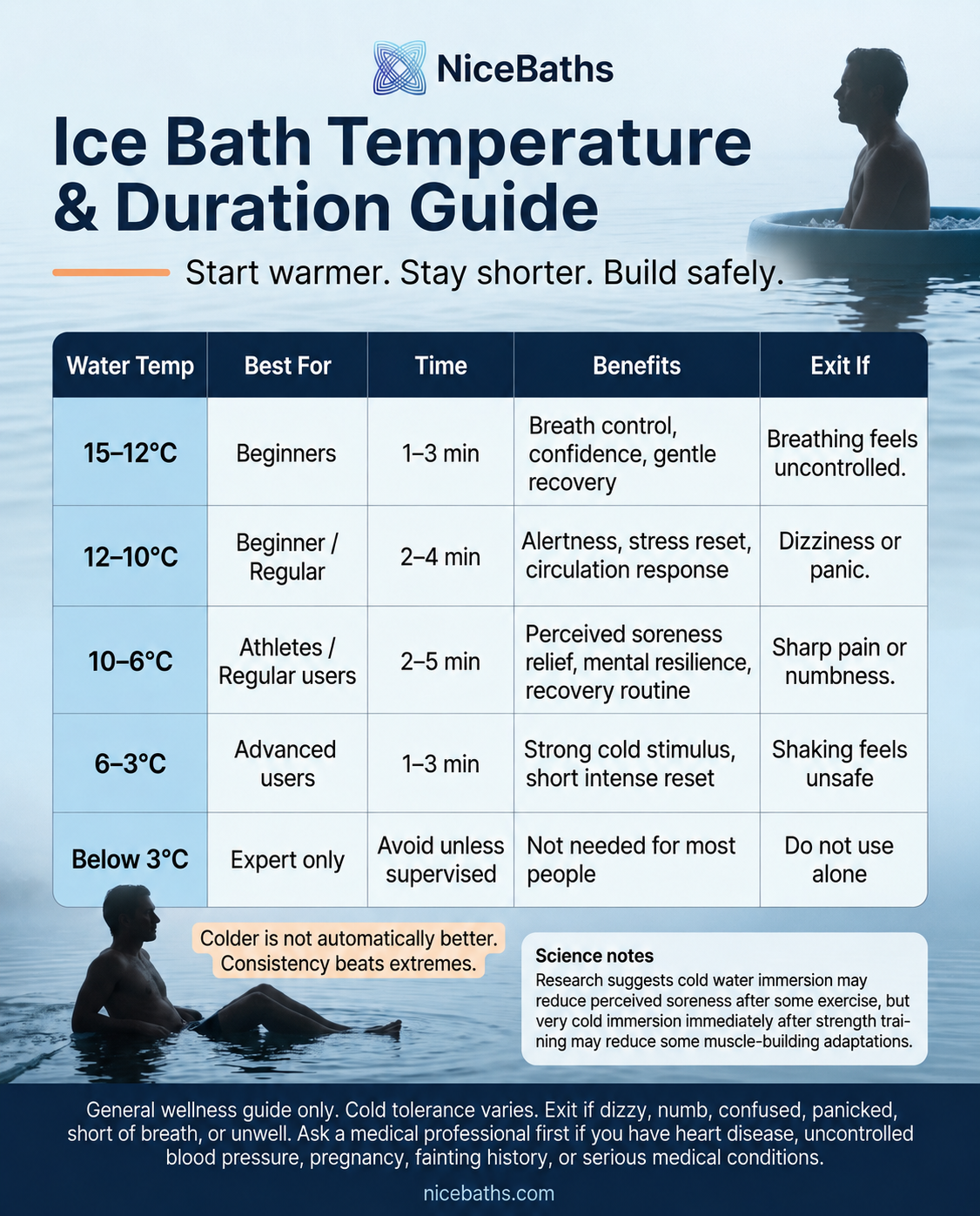
General wellness guide only. Start warmer and shorter. Exit if dizzy, numb, panicked, confused or unwell. Speak with a medical professional if you have heart disease, uncontrolled blood pressure, pregnancy, fainting history or other medical conditions.
Colder is not automatically better. For most people, consistency matters more than chasing the lowest temperature. A well-controlled 10–12°C session done regularly may be more useful than an extreme session that feels unsafe or impossible to repeat. For beginners, the goal is calm breathing — not suffering.
What happens during different ice bath durations?
0–30 seconds: Cold shock response
The first seconds are mostly about the body reacting to cold. Breathing may become faster, heart rate can rise and the body begins constricting blood vessels near the skin. This is where calm breathing matters most.
30 seconds–2 minutes: Nervous system training
This is often the most useful beginner window. Users practice staying calm under stress. Many people report feeling more alert, focused and mentally reset afterward.
2–5 minutes: Recovery-focused exposure
This range is often used by athletes and regular cold plunge users. Cold water immersion may reduce perceived soreness and fatigue after exercise, especially after endurance or team-sport training. It should not be treated as a cure-all.
5+ minutes: Advanced exposure
Longer sessions are not automatically better. Risk increases as the body continues losing heat. For most home users, short and repeatable sessions are smarter than trying to stay in as long as possible.
Best times to use an ice bath
- After endurance training
- After football, running, cycling or high-intensity conditioning
- After hot outdoor training
- On recovery days
- When you want a mental reset
Be careful with cold plunging immediately after heavy strength training if your main goal is muscle growth. Some research suggests immediate cold water immersion after resistance training may reduce some muscle-building adaptations (Roberts et al., 2015). For hypertrophy, consider using cold exposure later in the day or on a separate recovery day.
How long should an ice bath be?
- Beginners: 1–3 minutes
- Intermediate: 2–5 minutes
- Advanced: 3–8 minutes depending on temperature and experience
How many times per week?
- Beginner: 1–2 times per week
- Regular wellness user: 2–4 times per week
- Athlete / recovery user: 3–5 times per week depending on training load
Cold plunge before or after training?
For recovery after intense endurance training, cold plunges can feel excellent. For muscle growth, timing matters — some research suggests cold immersion immediately after strength training may reduce some hypertrophy signals. Consider spacing cold exposure several hours from heavy lifting.
Nairobi and Kenya context
Nairobi's altitude and moderate climate mean stored water often starts cooler than at the coast, so a proper chiller can reach cold plunge temperatures efficiently. In hotter areas like Mombasa, shaded placement, insulation and continuous circulation matter more.
Safety notes
Avoid cold plunges or consult a medical professional first if you have heart disease, uncontrolled high blood pressure, fainting history, pregnancy, severe asthma, cold urticaria, or other medical conditions affected by cold exposure. Never use an ice bath alone if you are new to it.
NiceBaths takeaway
Instead of buying ice every time, a chiller-based system from NiceBaths gives you adjustable cold, consistent sessions, cleaner water, filtration and dual cold/warm functionality. Cold should feel powerful — but it should also feel controlled and nice.
Want help choosing the right cold plunge temperature?
WhatsApp NiceBaths Kenya for setup advice, pricing and availability — or browse the ice bath bundle.
See the system →Frequently asked questions
What temperature is best for beginners?+
Most beginners should start around 10–15°C for 1–3 minutes. The goal is controlled breathing and consistency, not extreme cold.
Is 3°C too cold?+
3°C is very cold and should be treated as advanced. It can be used for short sessions by experienced users, but most people do not need water that cold to benefit from cold exposure.
How long should I stay in an ice bath?+
Beginners can start with 1–3 minutes. Regular users often use 2–5 minutes. Longer sessions are not automatically better and can increase risk.
Should I ice bath after lifting weights?+
If your main goal is muscle growth, avoid very cold immersion immediately after strength training. Consider doing cold exposure later in the day or on separate recovery days.
How often should I cold plunge?+
A practical starting point is 1–2 times per week. Regular users may use cold plunges 2–4 times per week depending on goals, tolerance and training load.
Who should avoid ice baths?+
People with heart disease, uncontrolled blood pressure, fainting history, pregnancy, cold sensitivity or serious medical conditions should speak with a medical professional before using cold plunges.
References
- Bleakley CM, McDonough S, Gardner E, Baxter GD, Hopkins JT, Davison GW. Cold-water immersion (cryotherapy) for preventing and treating muscle soreness after exercise. Cochrane Database of Systematic Reviews, 2012.
- Leeder J, Gissane C, van Someren K, Gregson W, Howatson G. Cold water immersion and recovery from strenuous exercise: a meta-analysis. British Journal of Sports Medicine, 2012.
- Hohenauer E et al. The effect of post-exercise cryotherapy on recovery characteristics: a systematic review and meta-analysis. PLOS ONE, 2015.
- Roberts LA et al. Post-exercise cold water immersion attenuates acute anabolic signalling and long-term adaptations in muscle to strength training. The Journal of Physiology, 2015.
- Piñero A et al. Effects of post-exercise cold water immersion on resistance training-induced hypertrophy: systematic review and meta-analysis. European Journal of Sport Science.
- Tipton MJ. Cold water immersion and cold shock response research.
- Cardiovascular caution guidance for cold exposure — American Heart Association; general safety guidance from Mayo Clinic and Cleveland Clinic.
Not sure where to start?
Unsure which setup is right for you?
Take the 60-second recovery quiz for a personalized plan.
Take the 60-second recovery quiz →Talk to NiceBaths
Questions about “Cold Plunge Temperature Guide: What Temperature Should an Ice Bath Be?”?
Message us on WhatsApp — your note is pre-filled with a reference to this article so we can help you faster.
WhatsApp NiceBaths about this article