
Your body already runs on a temperature clock. Cool in the early morning, warmer through the day, and a small drop in core temperature at night that helps you fall asleep. A good recovery routine works with that rhythm — not against it.
In 2026, the most useful home wellness setup in Kenya is not "an ice bath" or "a sauna." It is a small pair of tools you can use at two different times of day, in two different ways. Cold in the morning to sharpen. Heat at night to soften.
Cold to start the day. Heat to end it. One tub, one sauna, two very different nervous-system signals.
The circadian idea in one paragraph
Your core temperature naturally rises across the morning, peaks in the late afternoon, and drops as bedtime approaches. Bright light, movement and cold exposure tend to reinforce the "wake" side of that curve. Dim light, slower breathing and warm exposure tend to reinforce the "wind-down" side. Aligning your recovery habits with those two directions is a simple, low-cost upgrade for most people.
The morning cold session
Cold plunges are best used when you actually want to feel awake, alert and slightly activated. That is almost always earlier in the day.
- Water temperature: 8–12°C for regular users, 12–15°C for beginners.
- Duration: 1–3 minutes to start; 3–5 minutes once adapted.
- Breath: long, slow nasal exhales. No hyperventilating before entry.
- After: towel off, warm layers, natural rewarming. Skip the hot shower straight after if you want to keep the alertness effect.
Do not use cold plunges as a stimulant if you already feel wired, anxious or under-slept. Cold is a stress. Some days you need less stress, not more.
The evening warm session
Warm water immersion and sauna sit on the opposite side of the nervous system. Blood vessels relax, breathing slows, shoulders drop. For many people, a warm session 60–90 minutes before bed is a strong sleep-onset signal — not because heat itself puts you to sleep, but because the rewarming and cooling curve afterward mimics your body's own bedtime dip.
- Warm soak: 38–40°C for 10–15 minutes in the same NiceBaths tub, using the 2HP chiller-heater-filter unit in heating mode.
- Steam sauna: 40–50°C perceived heat for 10–20 minutes in a NiceBaths portable steam sauna tent.
- Timing: finish 60–90 minutes before bed. Dim the lights afterward.
- Hydration: water before and after. No alcohol.
A simple weekly template
| Day | Morning | Evening |
|---|---|---|
| Mon | Cold plunge, 2 min | Warm soak, 12 min |
| Tue | Cold plunge, 3 min | Steam sauna, 15 min |
| Wed | Rest / walk | Warm soak, 10 min |
| Thu | Cold plunge, 3 min | Steam sauna, 15 min |
| Fri | Cold plunge, 2 min | Warm soak, 12 min |
| Sat | Contrast session (see below) | Rest |
| Sun | Rest | Steam sauna, 20 min |
For a fuller weekend contrast round using both cold and heat, see our contrast therapy protocols guide.
Why one system covers both ends
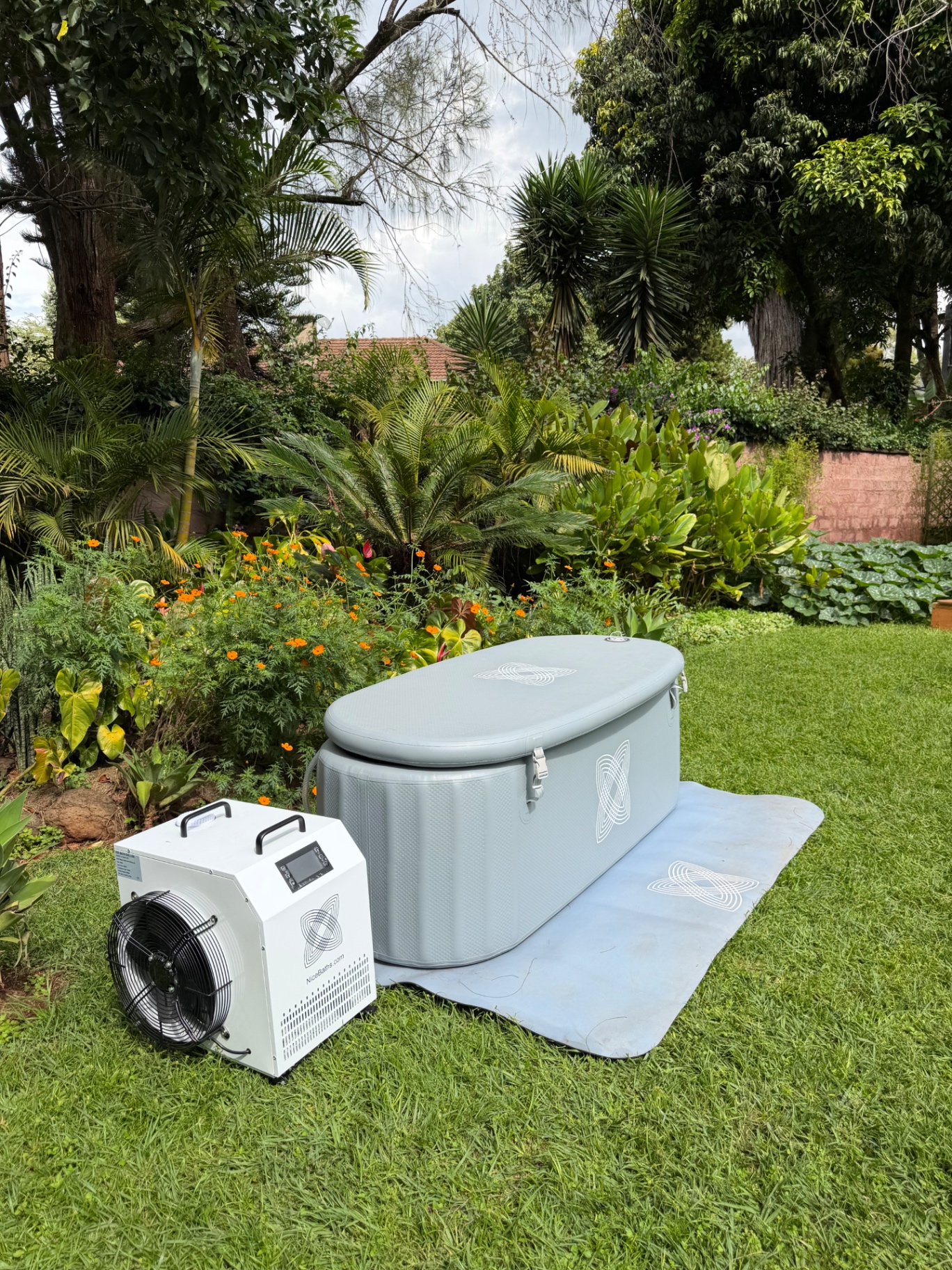
You do not need a separate "ice barrel" and "hot tub." A single NiceBaths inflatable tub plus the 2HP chiller-heater-filter unit does both. Cool it down for the morning. Heat it up for the evening. Add a portable steam sauna tent if you want dry-adjacent heat too.
- One tub, two temperatures
- No permanent build, no plumbing
- Filtration built in so the water stays usable
- Delivered across Kenya with WhatsApp support
Build a circadian recovery routine at home
NiceBaths Kenya supplies inflatable ice bath + jacuzzi systems and portable steam sauna tents — everything you need for cold mornings and warm evenings.
See the setups →Common mistakes
- Cold too late in the day. A 9pm plunge can push alertness into your bedtime window.
- Heat too close to bed. Finishing a hot sauna 10 minutes before sleep can delay onset.
- Chasing intensity over consistency. Three easy weeks beat one hero session.
- Ignoring sleep pressure. If you are already exhausted, rest is the recovery.
Safety note
Cold and heat both put load on the cardiovascular system. Do not use if you are pregnant, have heart disease, uncontrolled blood pressure, a fainting history, or serious medical conditions without first speaking to a qualified professional. Never immerse or steam alone during early sessions. Exit at the first sign of dizziness, numbness, panic or confusion. See our Health & Safety page.
Frequently asked questions
Why cold in the morning and heat at night?+
Cold exposure tends to raise alertness and sympathetic activation — useful early in the day. Warm soaking and sauna encourage a parasympathetic wind-down that many people find helpful before sleep.
Can I use the same NiceBaths tub for both?+
Yes. The inflatable tub paired with the 2HP chiller-heater-filter unit cools to around 3°C for a morning plunge and heats to around 40°C for a warm evening soak.
How long before bed should I finish a warm soak or sauna?+
Most people do well finishing 60–90 minutes before bed so core temperature can drop, which is itself part of the sleep signal.
Is this routine safe for everyone?+
No. If you have heart conditions, uncontrolled blood pressure, are pregnant, or have a fainting history, speak with a qualified medical professional before starting cold or heat protocols.
How many days a week should I run it?+
A common starting cadence is 3–5 mornings of cold and 3–4 evenings of warm heat per week. Consistency matters more than intensity.
References
- Haghayegh S et al. "Before-bedtime passive body heating by warm shower or bath to improve sleep: A systematic review and meta-analysis." Sleep Medicine Reviews, 2019. DOI: 10.1016/j.smrv.2019.04.008
- Kräuchi K, Cajochen C, Werth E, Wirz-Justice A. "Warm feet promote the rapid onset of sleep." Nature, 1999. DOI: 10.1038/43366
- Versey NG, Halson SL, Dawson BT. "Water immersion recovery for athletes: effect on exercise performance and practical recommendations." Sports Medicine, 2013. DOI: 10.1007/s40279-013-0063-8
- Laukkanen T et al. "Association between sauna bathing and fatal cardiovascular and all-cause mortality events." JAMA Internal Medicine, 2015. DOI: 10.1001/jamainternmed.2014.8187
Not sure where to start?
Unsure which setup is right for you?
Take the 60-second recovery quiz for a personalized plan.
Take the 60-second recovery quiz →Talk to NiceBaths
Questions about “Cold in the morning, heat at night: a circadian routine for sleep and recovery”?
Message us on WhatsApp — your note is pre-filled with a reference to this article so we can help you faster.
WhatsApp NiceBaths about this article